TL;DR
"High-functioning alcoholic" is not a medical diagnosis. The clinical term is alcohol use disorder (AUD), and it can be mild, moderate, or severe.[1]
Holding a job and paying your bills does not rule out AUD. Diagnosis rests on 11 criteria, and meeting two or more is enough.[2]
If you drink heavily every day, do not stop suddenly without medical advice. Withdrawal can be dangerous.
Alcohol rehab in Orange County comes in several levels of care, and a clinical assessment can tell you which one fits.[3]
Treatment works. Therapy, support groups, and medication can all help people reach and keep recovery.[1]
Table of Contents
Introduction
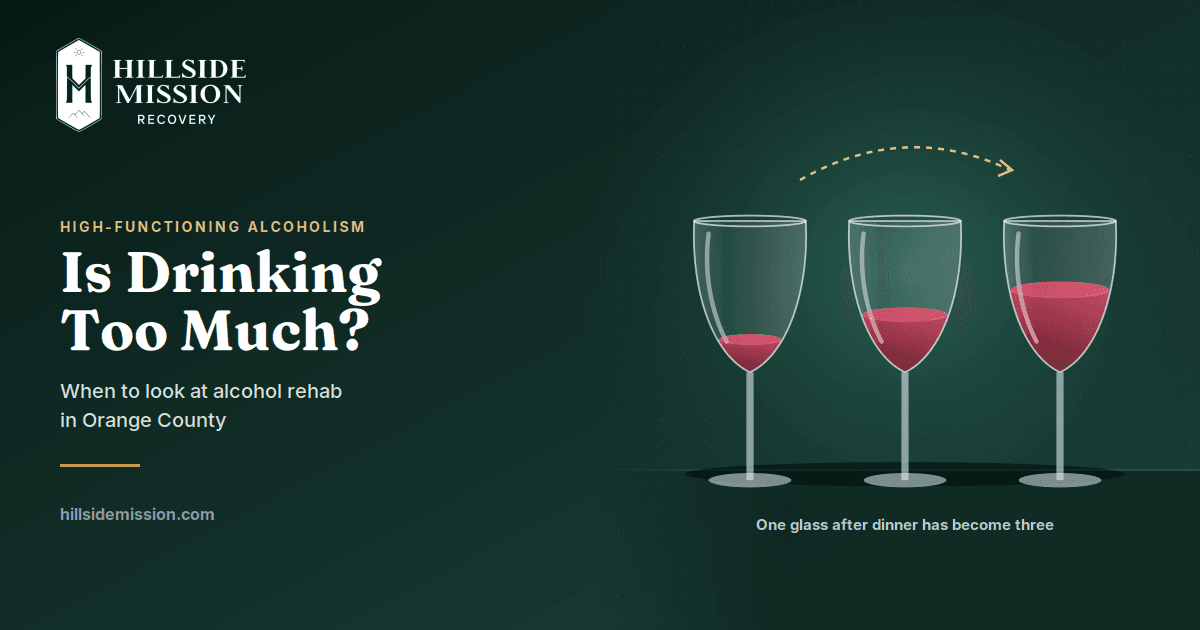
You still get to work on time. You still show up for your kids. But the glass of wine after dinner has become three, or the weekend drinks now start on Thursday, and a quiet question keeps coming back: is this too much?
Asking that question is not an overreaction. This article explains what "high-functioning" drinking means, how clinicians decide whether someone has an alcohol use disorder, and when it makes sense to look at alcohol rehab in Orange County. If you are reading for someone you love, the same information applies to them. If you are weighing a bigger step, our guide to 9 signs it's time to consider an Orange County rehab program covers the broader picture.

What is high-functioning alcoholism? Myths vs. reality
"High-functioning alcoholic" is a phrase people use for someone who drinks heavily but keeps up their job, home, and public image. It is not a diagnosis. The medical term is alcohol use disorder, which the National Institute on Alcohol Abuse and Alcoholism (NIAAA) describes as an impaired ability to stop or control drinking despite social, occupational, or health consequences.[1]
The label is risky because it sounds like a reassurance. It can let a person say, "I'm not that kind of drinker," while the problem grows.
Myth | Reality |
|---|---|
If I have a job, I don't have a problem. | AUD is defined by loss of control and continued use despite harm. Employment is not one of the criteria.[2] |
Alcoholism only means drinking every day. | Some people drink only on certain days but cannot stop once they start. Severity is based on symptoms, not a schedule. |
I'd have to hit rock bottom first. | AUD can be mild, moderate, or severe, and treatment helps at every stage.[1] |
Willpower should be enough. | AUD is considered a brain disorder. Lasting changes in the brain make people vulnerable to relapse.[1] |

How much is too much? Low-risk vs. heavy drinking
There is no single number that separates safe from unsafe for every person. Risk depends in part on how much, how often, and how quickly you drink.[1] NIAAA defines alcohol misuse as drinking in a manner, situation, amount, or frequency that could cause harm to you or to people around you. That includes binge drinking and heavy drinking.[1]
The pattern often matters more than the weekly total. Someone who has two drinks most nights and someone who has none all week and then seven on Saturday can both be at risk, for different reasons.
Other things raise your odds of developing AUD, and several of them have nothing to do with willpower:
Starting to drink young. People 26 and older who began drinking before age 15 were more likely to report AUD in the past year than those who waited until 21 or later.[1]
Family history. Heritability accounts for about 60% of risk, and genes and environment interact.[1]
Mental health conditions and trauma, including depression, post-traumatic stress disorder, and ADHD.[1]

Warning signs you may be drinking too much
Warning signs in working adults tend to be quiet. They show up in routines and small compromises, not in dramatic scenes. Ask yourself, or the person you are worried about:
Do you drink more or longer than you planned?
Have you tried to cut back and found you could not?
Do you need more alcohol than before to feel the same effect?
Do you plan your day around when you can drink, or hide how much you have had?
Do you feel shaky, anxious, sweaty, or unable to sleep when you go without?
Have you kept drinking after it caused trouble with a partner, a boss, or your health?
For family members, the signs often look like this: a drink always in hand at gatherings, mornings that start slowly, promises to cut back that quietly fall apart, and irritability when alcohol is not available. One or two of these does not prove anything. A pattern deserves a conversation.

How alcohol use disorder is diagnosed: the DSM-5 criteria
Clinicians in the United States use the Diagnostic and Statistical Manual of Mental Disorders (DSM-5-TR), published by the American Psychiatric Association, as the standard classification of mental disorders.[2] For alcohol use disorder, a clinician counts how many of 11 symptoms you have had over the past 12 months. Meeting two or three is mild, four or five is moderate, and six or more is severe.
The 11 symptoms cover four areas, and many working adults recognize themselves in more of them than they expected.
Area | What it looks like |
|---|---|
Loss of control | Drinking more than intended, failed attempts to cut down, lots of time spent drinking or recovering, cravings |
Life impact | Missing obligations, ongoing relationship trouble, giving up activities you enjoyed |
Risk | Drinking in risky situations, continuing despite physical or mental health problems |
Body's response | Tolerance and withdrawal |
You can meet the threshold without any legal trouble or job loss. A qualified clinician makes the diagnosis, not an online checklist, but knowing the criteria helps you describe your drinking honestly.

The hidden risks of functioning while drinking heavily
Functioning well on the outside can delay help for years. During that time, tolerance builds, and the body adapts to alcohol being present. That adaptation is what makes sudden withdrawal dangerous later.
The NIAAA notes that lasting brain changes from alcohol misuse keep AUD going and make relapse more likely.[1] The longer heavy drinking continues, the more entrenched those patterns can become.
Other costs are harder to measure. You may be at the dinner table but not really there. Sleep suffers. Anxiety can rise between drinks. Family members often carry the strain quietly, covering for you or walking on eggshells. If depression, trauma, or anxiety sits underneath the drinking, treating only the alcohol leaves part of the problem in place. That is why we offer dual diagnosis treatment for people with both.

When to look at alcohol rehab in Orange County
You do not need a crisis to look at alcohol rehab in Orange County. Consider it if you have tried to cut back and could not, if withdrawal symptoms appear when you skip drinking, if drinking is affecting your health or relationships, or if someone close to you has raised concern more than once.
Safety comes first. If you drink heavily every day, stopping abruptly can cause serious withdrawal. Talk with a medical professional before you quit. Medical detox provides monitoring and medication support during that phase.
The American Society of Addiction Medicine (ASAM) publishes the ASAM Criteria, a set of guidelines used to build person-centered treatment plans for addiction and co-occurring conditions.[3] In practice, that means the right alcohol rehab in Orange County is matched to your needs rather than assigned by default. Options generally range from outpatient programs to residential inpatient care. If you are comparing the lighter options, see our breakdown of intensive outpatient versus outpatient rehab in Orange County.
The SAMHSA treatment locator at FindTreatment.gov and its national helpline are also free places to start.[4]

What to expect from treatment and how to take the first step at Hillside Mission Recovery
Treatment begins with an assessment of your drinking history, physical health, mental health, and home situation. From there, the team recommends a level of care. Evidence-based treatment can include behavioral therapies, mutual-support groups, and medications. The NIAAA states that these approaches can help people with AUD achieve and maintain recovery however severe the problem seems.[1] SAMHSA also describes a range of treatment and support options for substance use disorders.[4]
For many people, the first week is detox and stabilization, followed by therapy and planning for life after treatment. Our guide to what to expect in rehab in Orange County walks through a typical stay. Recovery continues after discharge, and our aftercare and alumni program keeps support in place. You can read more about how aftercare plans are built.
The first step at Hillside Mission Recovery is a confidential conversation at hillsidemission.com. You do not have to decide anything on that call. If you are the family member, our post on supporting a loved one through rehab may help.

Frequently Asked Questions
Q: What is a high-functioning alcoholic, and is it an official diagnosis?
A: It is a casual phrase for someone who drinks heavily while keeping up work and family life. It is not an official diagnosis. The medical term is alcohol use disorder, rated mild, moderate, or severe.[1]
Q: How many drinks per week is considered too much?
A: There is no one number that fits everyone. Risk depends on how much, how often, and how quickly you drink, along with family history and mental health.[1] A better test is whether you can stick to limits you set and whether drinking is causing problems.
Q: Can I have an alcohol use disorder if I have a job, family, and no legal problems?
A: Yes. The DSM-5-TR criteria look at loss of control, life impact, risk, and tolerance or withdrawal. Steady employment and a clean record are not part of the diagnosis.[2]
Q: Is it safe to stop drinking on my own, or do I need medical detox?
A: If you drink heavily and regularly, stopping suddenly can cause dangerous withdrawal. Speak with a medical professional first. Medical detox allows monitoring and treatment of symptoms as they happen.
Q: What types of alcohol rehab in Orange County are available, and how do I know which level of care fits me?
A: Alcohol rehab in Orange County ranges from outpatient and intensive outpatient programs to residential care, often beginning with detox. An assessment based on guidelines like the ASAM Criteria matches the level of care to your health, withdrawal risk, mental health, and home environment.[3]
Conclusion
Being able to function does not mean drinking is safe. If you recognize yourself in the warning signs or the DSM-5 criteria, an assessment is a reasonable next step, and looking into alcohol rehab in Orange County does not commit you to anything. Hillside Mission Recovery can answer your questions, explain the levels of care, and help you or your family member decide what comes next. Call or visit hillsidemission.com to start a confidential conversation today.
References
National Institute on Alcohol Abuse and Alcoholism. Understanding Alcohol Use Disorder. https://www.niaaa.nih.gov/alcohols-effects-health/alcohol-use-disorder
American Psychiatric Association. Diagnostic and Statistical Manual of Mental Disorders (DSM-5-TR). https://www.psychiatry.org/psychiatrists/practice/dsm
American Society of Addiction Medicine. ASAM and The ASAM Criteria. https://www.asam.org
Substance Abuse and Mental Health Services Administration. Substance Use Disorder Treatment. https://www.samhsa.gov/substance-use/treatment
Ready to take the next step?
If you or someone you love is struggling, Hillside Mission is here to help — confidentially, 24/7.