TL;DR
Codeine cough syrup contains codeine, an opioid, often paired with other drugs such as promethazine or guaifenesin. It is a controlled substance.
Codeine slows breathing. Taking more than directed, or mixing it with alcohol or sedatives, can cause an overdose.
Regular use can lead to physical dependence and opioid use disorder, even when the first dose was legitimate.
Withdrawal is rarely life-threatening but is miserable, and medical support makes it safer and easier to get through.
If codeine cough syrup use has become hard to control, treatment works. Hillside Mission Recovery can help you start.
Table of Contents
Codeine cough syrup ingredients: what's actually in the bottle
Hidden health risks: overdose, respiratory depression, and dangerous combinations
Introduction
A bottle of cough syrup in the medicine cabinet looks harmless. Most people think of it as something for a bad cold, not as an opioid. But codeine cough syrup is an opioid, and it carries the same risks as other opioids: dependence, overdose, and a pull that can be hard to resist.
This article explains what is in codeine cough syrup, how it acts on the brain, which combinations are dangerous, and how to tell when use has crossed a line. If you are reading because of someone you love, or because of yourself, you will get plain answers here.
What is codeine cough syrup and why is it prescribed?
Codeine cough syrup is a liquid medicine that contains codeine, a drug made from the opium poppy. Doctors prescribe it to calm a severe, persistent cough, usually for a short time. Codeine works on the part of the brain that triggers the cough reflex.
Because codeine is an opioid, it is a controlled substance, and the DEA maintains the schedules that govern how such drugs are prescribed and tracked.[1] That is why you generally need a prescription. It is also why a bottle left over from an old illness deserves more care than most people give it.

Codeine cough syrup ingredients: what's actually in the bottle
Formulas vary by brand and by pharmacy. Most codeine cough syrup combines codeine with one or more other drugs. The label and your pharmacist are the only reliable guides to what is in your bottle.
Ingredient | What it does | Why it matters |
|---|---|---|
Codeine phosphate | Suppresses the cough reflex; relieves pain | The opioid. Source of dependence and overdose risk. |
Promethazine | Antihistamine that causes drowsiness | Adds sedation, which stacks with codeine's effects on breathing. |
Guaifenesin | Loosens mucus | Not sedating. Present in some formulas. |
Sweeteners, flavoring, dyes | Make the liquid palatable | Can make a strong drug easy to take in large amounts. |
Alcohol (in some products) | Solvent | Adds to sedation. Check the label. |
The sweet taste and syrupy texture can make the drug feel less serious than a pill. It is just as serious.

How codeine works as an opioid in the brain and body
Your body turns codeine into morphine. Morphine attaches to opioid receptors in the brain and spinal cord, which dulls pain, quiets the cough reflex, and can create a warm, calm, drowsy feeling. NIDA, the federal agency that supports research on drug use and addiction, lists opioids among its main topics.[2]
That same calm is what makes the drug risky. Opioid receptors also control breathing, so the effect that feels soothing can slow your breath to a dangerous level. People differ in how fast they convert codeine to morphine, which means the same dose can hit one person lightly and another very hard.

Hidden health risks: overdose, respiratory depression, and dangerous combinations
Respiratory depression means breathing becomes slow and shallow. In a codeine overdose, it is the main danger. Oxygen drops, the brain is starved, and without help the person can die.
Warning signs of an overdose include:
Very slow or irregular breathing, or gasping and gurgling sounds
Extreme sleepiness or being unable to wake
Pinpoint pupils
Blue or gray lips and fingertips
Cold, clammy skin
If you see these signs, call 911 first. Naloxone can reverse an opioid overdose, and our guide to what Narcan is and when to use it walks through the steps.
Combinations raise the risk sharply. Alcohol, benzodiazepines, sleep medicines, and other opioids all depress breathing too. Add a sedating ingredient like promethazine, and the effects pile up. To see how a far stronger opioid compares, read our piece on why fentanyl is so potent.

Dependence, misuse, and signs of codeine addiction
Dependence and addiction are different things. Dependence means your body has adapted and you feel unwell without the drug. Addiction, called opioid use disorder in clinical terms, means you keep using despite harm and cannot easily stop. Codeine cough syrup can lead to either, and sometimes both.
Misuse includes taking more than prescribed, taking it more often, using it to get high or to sleep, or using someone else's bottle. Signs that use may be turning into addiction:
Running out early, or asking for refills sooner than expected
Taking the syrup when there is no cough
Spending a lot of time getting it, using it, or recovering from it
Hiding bottles or lying about how much is gone
Pulling away from family, work, or school
Feeling sick, anxious, or achy when a dose is missed
Many people who misuse opioids also struggle with anxiety, depression, or trauma. We explain how that is handled in our article on dual diagnosis care.

Withdrawal and treatment options for codeine dependence
Opioid withdrawal feels like a severe flu: muscle aches, sweating, nausea, diarrhea, restlessness, trouble sleeping, and strong cravings. It is rarely dangerous on its own, but it is hard enough that many people go back to the drug just to make it stop. Medical supervision changes that. At medical detox, clinicians can ease symptoms and watch for complications.
Detox is the start, not the whole treatment. NIDA describes medications for opioid use disorder as safe, effective, and life-saving.[2] The American Society of Addiction Medicine, a society of more than 8,000 physicians and clinicians in addiction medicine, publishes the ASAM Criteria, a set of guidelines used to match each person to a level of care.[3]
Depending on your needs, that may mean residential inpatient care, then a step down to outpatient. We compare those steps in our article on intensive outpatient versus standard outpatient. After treatment, aftercare and alumni support helps you keep what you have built.

When to seek help at Hillside Mission Recovery
Reach out if you cannot cut back, if you need more syrup to feel the same effect, or if stopping makes you sick. Reach out if a family member is hiding bottles or seems sedated much of the day. You do not need to be sure it is addiction. A call is a way to find out.
If you are not ready to call us, the national helpline and the treatment locator from SAMHSA are free options, and the helpline number is 1-800-662-HELP (4357).[4] If you also drink heavily, NIAAA offers a navigator for alcohol treatment, and our post on high-functioning alcoholism covers the signs.[5] Not sure what rehab looks like? Read what to expect in drug rehab, or see 9 signs it is time for a program.
Frequently Asked Questions
Q: What is in codeine cough syrup?
A: The active drug is codeine, an opioid. Many formulas also contain promethazine, an antihistamine that causes drowsiness, or guaifenesin, which thins mucus. Sweeteners and flavoring are added, and some products contain alcohol. Read the label or ask your pharmacist.
Q: Is codeine cough syrup an opioid, and can you get addicted to it?
A: Yes, it is an opioid, and yes, addiction is possible. Risk rises with higher doses, longer use, using it for reasons other than cough, and a personal or family history of substance use. Taking it exactly as prescribed for a short time carries a lower risk, but not zero.
Q: What are the side effects and overdose symptoms of codeine cough syrup?
A: Common side effects are drowsiness, dizziness, nausea, constipation, and itching. Overdose signs are slow or stopped breathing, being unable to wake, pinpoint pupils, and blue lips. Call 911 right away and give naloxone if you have it.
Q: Is it dangerous to mix codeine cough syrup with alcohol or other drugs?
A: Yes. Alcohol, benzodiazepines, sleep aids, and other opioids all slow breathing, and combined with codeine the effect can be deadly. Even a drink or two can be too much on top of a dose. Tell your doctor about everything you take.
Q: How do I know if I or a loved one needs treatment for codeine misuse, and what does treatment involve?
A: Consider treatment if use is hard to control, causes problems at home or work, or stopping brings withdrawal. An assessment sets the level of care. Treatment often includes medical detox, medication for opioid use disorder when appropriate, therapy, care for co-occurring mental health conditions, and aftercare.
Conclusion
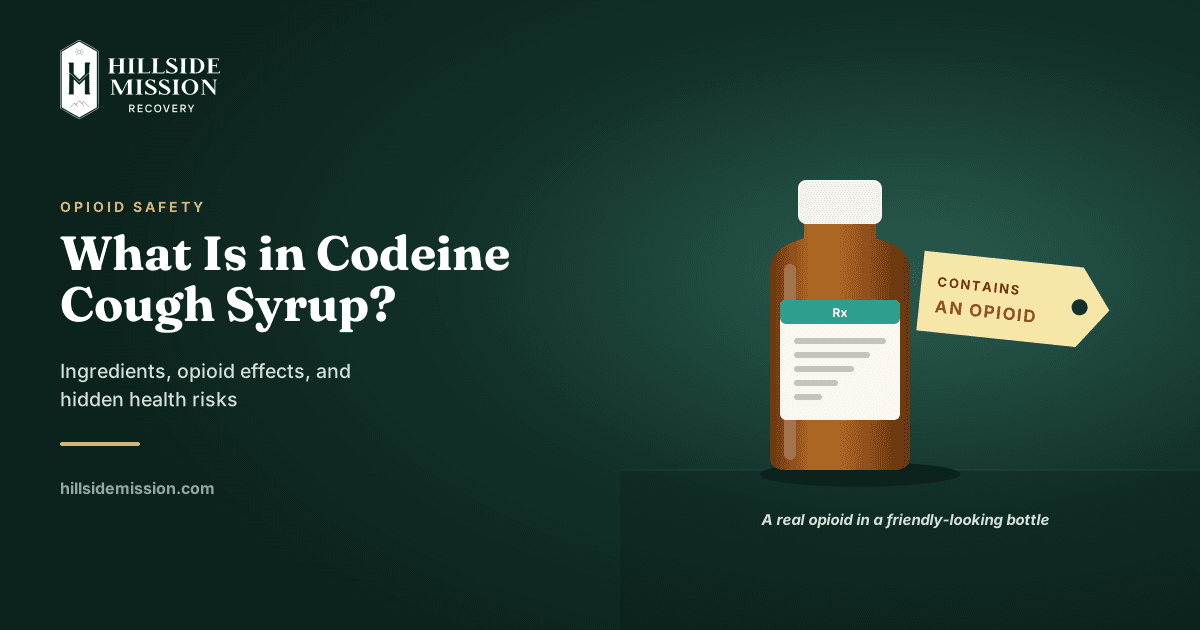
Codeine cough syrup is a real opioid in a friendly-looking bottle. Know what it contains, how it slows breathing, and which combinations are dangerous. Then watch for early signs of misuse.
If you or someone you love is struggling with codeine cough syrup, Hillside Mission Recovery can assess your situation and explain your options, from detox through aftercare. Call us today, and keep any leftover bottles locked up or dropped off at a year-round disposal site until you do.
References
U.S. Drug Enforcement Administration, Diversion Control Division. DEA Diversion Control Division | Home. - https://www.deadiversion.usdoj.gov
National Institute on Drug Abuse. NIDA.NIH.GOV | National Institute on Drug Abuse (NIDA). - https://nida.nih.gov
American Society of Addiction Medicine. ASAM - American Society of Addiction Medicine. - https://www.asam.org
Substance Abuse and Mental Health Services Administration. Home | SAMHSA - Substance Abuse and Mental Health Services Administration. - https://www.samhsa.gov
National Institute on Alcohol Abuse and Alcoholism. National Institute on Alcohol Abuse and Alcoholism (NIAAA). - https://www.niaaa.nih.gov
Ready to take the next step?
If you or someone you love is struggling, Hillside Mission is here to help — confidentially, 24/7.